Can You Run Your Own Life?
Independent living skills for teens include managing obligations, working through setbacks, dealing with institutions, and finishing real projects without constant supervision.
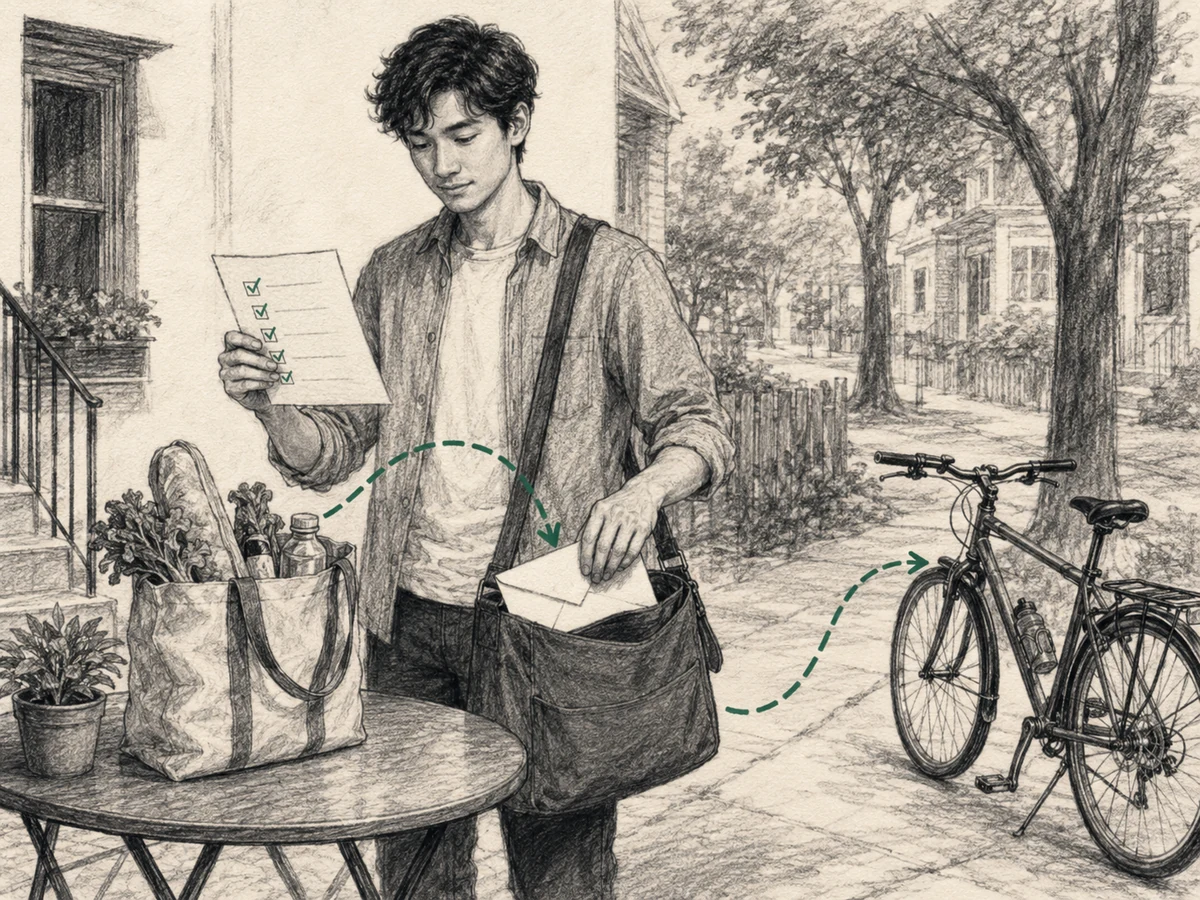
It's one thing to know how to do laundry, make a budget, or put an appointment on a calendar. It's another to notice that something needs doing, decide what comes first, handle the interruption, and finish without somebody standing over you.
That distinction is what I mean by running your own life. A young adult needs ordinary practical skills, but they also need follow-through: managing time, commitments, paperwork, relationships, and work that gets complicated halfway through.
A planner can help. So can a parent, a friend, or an AI tool. Independence doesn't mean refusing help. It means taking responsibility for the outcome, knowing when help is necessary, and being able to move the work forward when the original plan fails.
What it means to handle your own responsibilities
By 18, the floor is supposed to be built. So real life starts asking, quietly and constantly: can you wake up on your own, manage your own time, and meet your obligations without somebody managing you? Can you take an idea, break it into steps, keep going when it goes sideways, and actually finish it?
Can you handle the unglamorous stuff — clean, cook, do laundry, keep a space livable, stay on top of the paperwork that piles up whether you deal with it or not? Can you get something you need out of an institution that isn't designed to help you — fill out the form, find the right office, sit on hold, and not give up at the first dead end?
Can you stand up for yourself in a doctor's office, a classroom, a workplace, or a courtroom — notice when you are being dismissed, ask for a second opinion, and push back without falling apart? Can you get yourself somewhere — the route, the booking, the documents — and stay functional when the plan breaks at 11 p.m. in an unfamiliar place?
Can you try to fix the thing before you pay someone, and know the difference between "I can handle this" and "this is past me"? Can you work with other people — share the load, deal with the difficult person instead of avoiding them, take feedback without crumbling, and patch a relationship up after friction?
That cluster is the floor for this domain. Not the chores themselves — the capability running underneath them.
Running your own life
The first piece of this domain is the part nobody claps for.
It's the daily machinery of being a person: getting up, keeping track of what is due, feeding yourself, keeping your space from turning against you, dealing with the envelope you would rather ignore. It's boring, and it's the foundation everything else stands on.
A young adult who can't run this layer is not free, no matter how smart they are. Their life gets managed by accident, by whoever is willing to nag them, or by the consequences that pile up when nobody does. Capability here isn't about being tidy. It's about not needing a parent in the room to keep your own life from sliding.
Finishing what you start
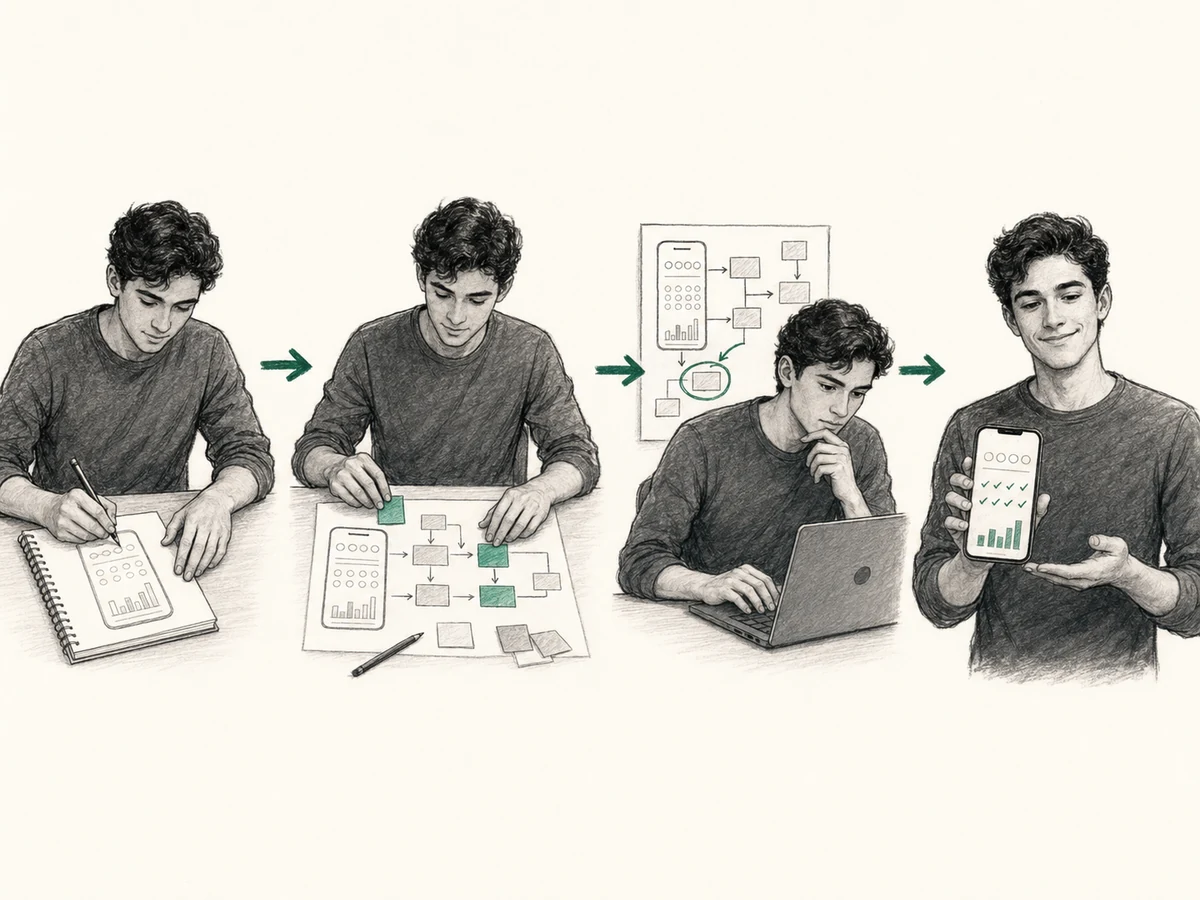
The other piece is execution: turning something that exists only in your head into something real — a move, a trip, a repair, a side project, a plan to dig out of a hole.
School mostly hands kids projects that are already shaped — the topic is assigned, the steps are listed, the deadline is set, the finish line is drawn. Real life doesn't do that. Real life hands you a vague goal, no instructions, a budget that is too small, a plan that breaks halfway through, and nobody checking whether you ever finish.
So the skills that matter are the ones school rarely grades: setting your own goal, breaking it down, adapting when it goes wrong, and pushing through the unglamorous middle where the excitement is gone and the thing is not done yet. Most things die in that middle.
The young adult who can survive it — who can move forward without a clear answer and teach themselves the next piece without waiting for a class — can finish the things that actually matter to them instead of leaving a trail of half-built starts.
Dealing with systems that were not built to help you
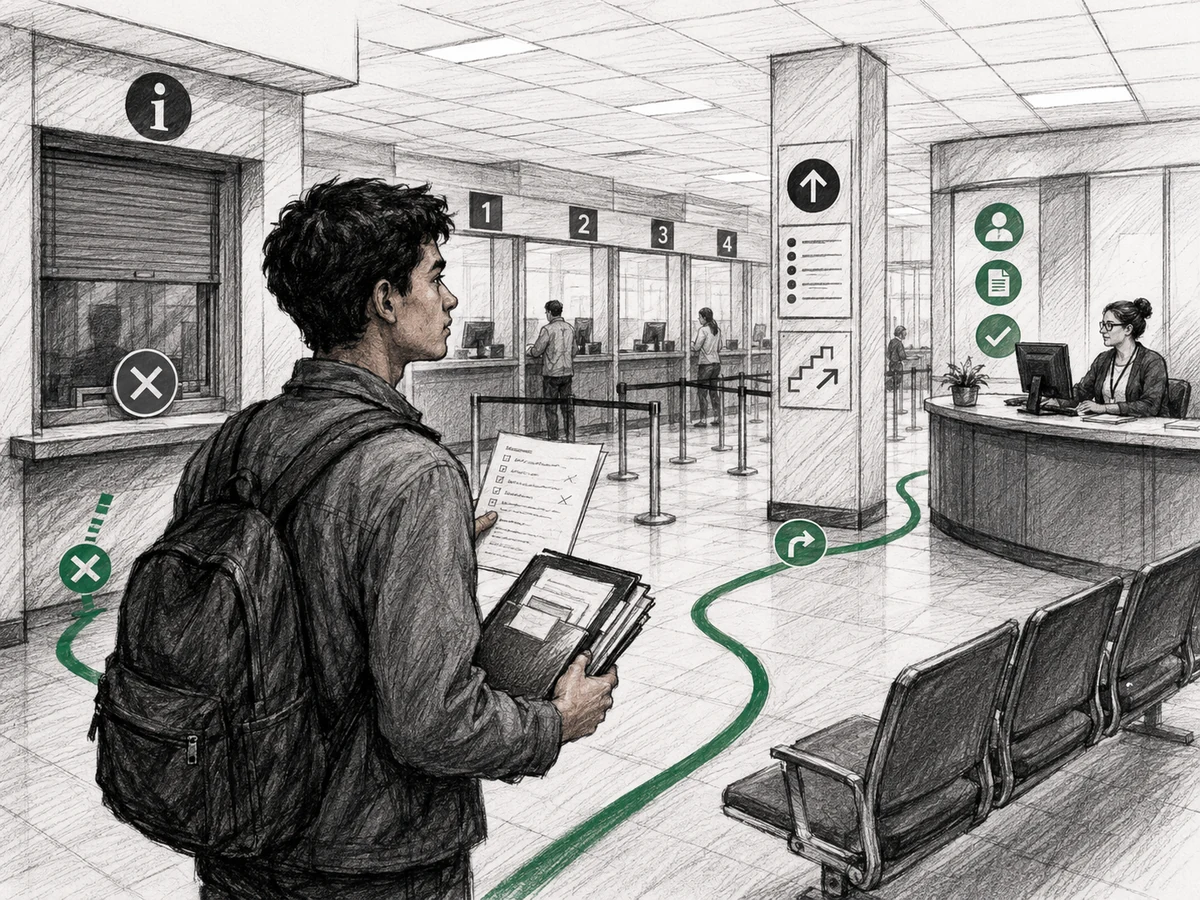
A lot of adult life happens inside institutions: banks, hospitals, government offices, schools, landlords, employers, border checkpoints. Most of them are not cruel. They are just built for their own convenience, and they will quietly roll over anyone who doesn't know how to push.
The capable young adult can navigate that without panicking. They can read what they are signing, find the person who can actually help, escalate when the first answer is wrong, and self-advocate in a setting where someone with more authority is treating them like a problem to move along. They know a first "no" is often not the final answer, and that most systems have more give than they advertise — if you stay calm, stay persistent, and know where there is room to push.
Getting things done also runs through people. The same young adult can walk into a room of strangers — a new job, a new city, an office full of people who do not know them — ask for help without shame, and build enough working rapport to function. Independence is not doing everything alone. It's being able to get what you need from the world, including from the people in it.
Hand over real responsibility
Nobody builds this from a lecture alone. This domain gets built by handing a kid responsibility a little earlier than feels comfortable, then stepping back far enough that it counts.
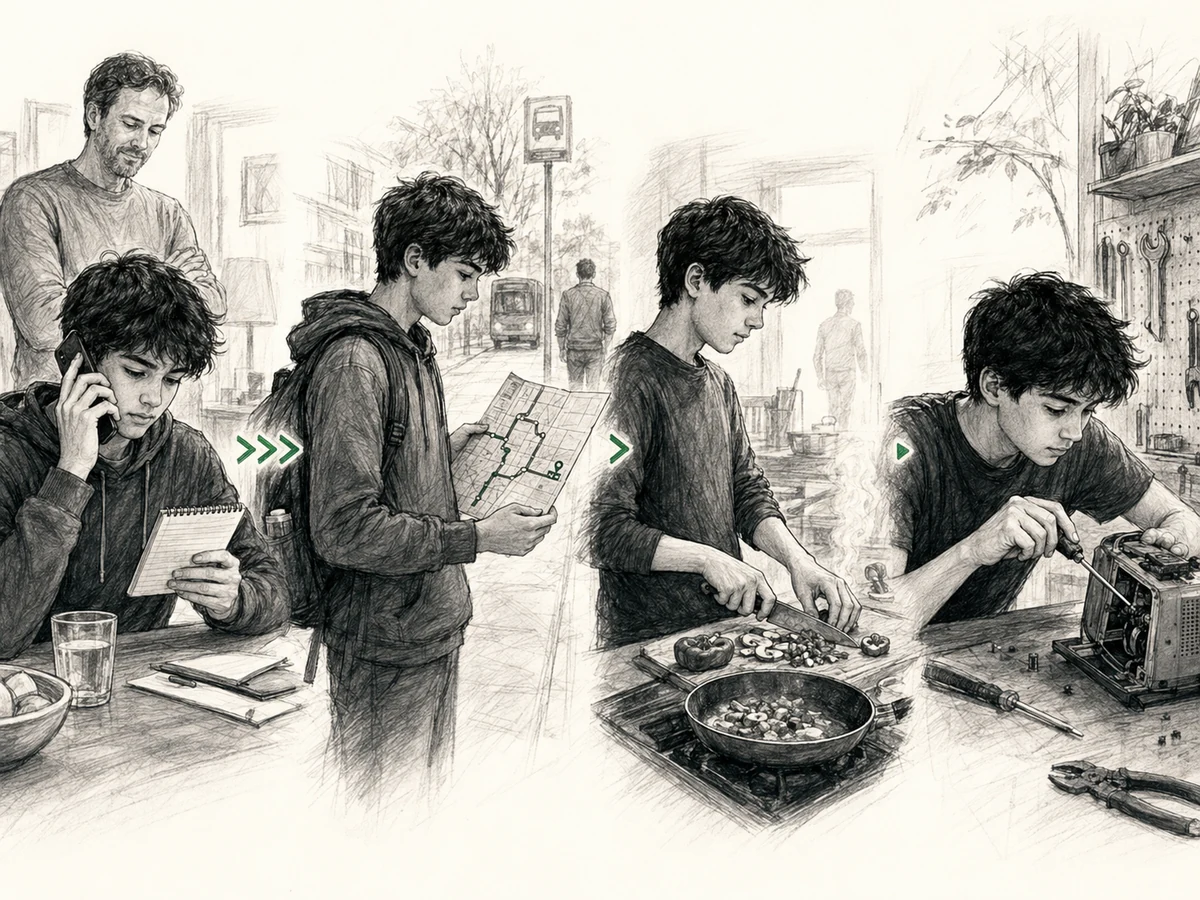
It's a ladder, run over years. Wake yourself up. Pack your own bag. Make the phone call instead of having it made for you. Cook the meal. Handle your own appointment. Plan the route. Fix the small broken thing. Run a real project from start to finish. And when it goes sideways — and it will — sit in the mess and work out the next move instead of being rescued out of it.
Each rung is a small handover of control. The job is not to do it for them, and not to leave them stranded. It's to keep moving the line out, letting them carry a little more than they did yesterday, and letting ordinary consequences teach the parts no parent can.
What independence isn't
The floor here is real, but it isn't a fantasy of total self-sufficiency.
It doesn't require mastering a trade. It doesn't require owning a home or a car. It doesn't require having your whole life figured out, and it doesn't require executing anything perfectly. Plenty of capable adults check in with someone before a big trip, call a professional for the hard repair, or change a plan three times before it works.
The standard is not flawless. The standard is functional: can you run your life, finish your work, and deal with the world without being helpless or managed like a child in an adult body?
From knowing a skill to using it
Every other domain gives a young adult something to think with. This one decides whether any of it leaves their head.
A person can understand money and still never make a budget happen. They can think clearly about ethics and never act on it. They can read, reason, create, and stay healthy — and still stall out the moment life asks them to plan something, finish something, or stand up for themselves in a system that is not listening.
Domain 10 is the floor learning to walk. It's the difference between a young adult who knows a lot and a young adult who can be dropped into a new job, a new city, or a hard week and figure it out.
That's the whole point of the floor. Not a transcript. Not a stack of finished classes. A person who can function, adapt, and build — and then go do it.
If you're handing more responsibility to a young person, what can they already handle without being managed — and where do they still stall? Send me a message. Tell me what you're handing over, what worked, and where this framework is missing something.