Don't Trust the Number Yet
Practical math skills for real life include estimation, algebra, geometry, interpreting statistics, and asking better questions about prices, risk, and misleading numbers.
A monthly payment can sound affordable until you calculate what you'll pay over the life of the loan. A discount can look impressive until you compare the original prices. A chart can be technically accurate and still leave out the information you need.
That's why I want young people to pause when a number is presented as an answer. What is being measured? Compared with what? Over how much time? What does the calculation leave out?
This isn't an excuse to dismiss school math. The LifeEducation minimum includes actual Algebra I and Geometry competence, alongside arithmetic, estimation, probability, and interpreting data. The point is to use that knowledge when a decision doesn't arrive neatly labeled as a math problem.
Where numbers meet real decisions
Real life will ask whether they can stand in front of a price, a rate, a chart, a loan, a salary, a statistic, a discount, or a payment plan and not get rushed by the number on the surface.
It will ask whether they can estimate before they calculate, compare before they believe, notice what is missing, and ask the question that changes the whole deal: compared to what?
Math that should survive a classroom
By 18, a young adult should be able to handle ordinary numbers without being babied.
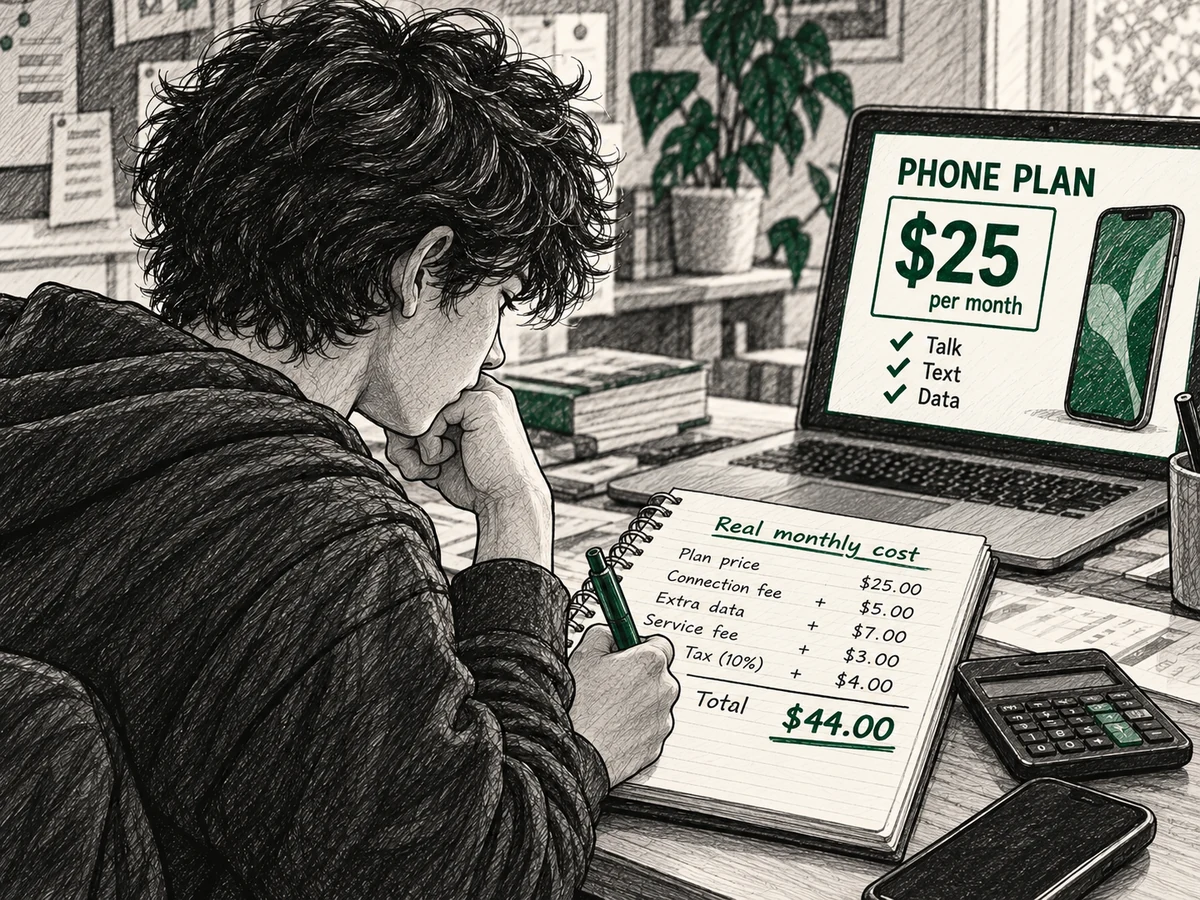
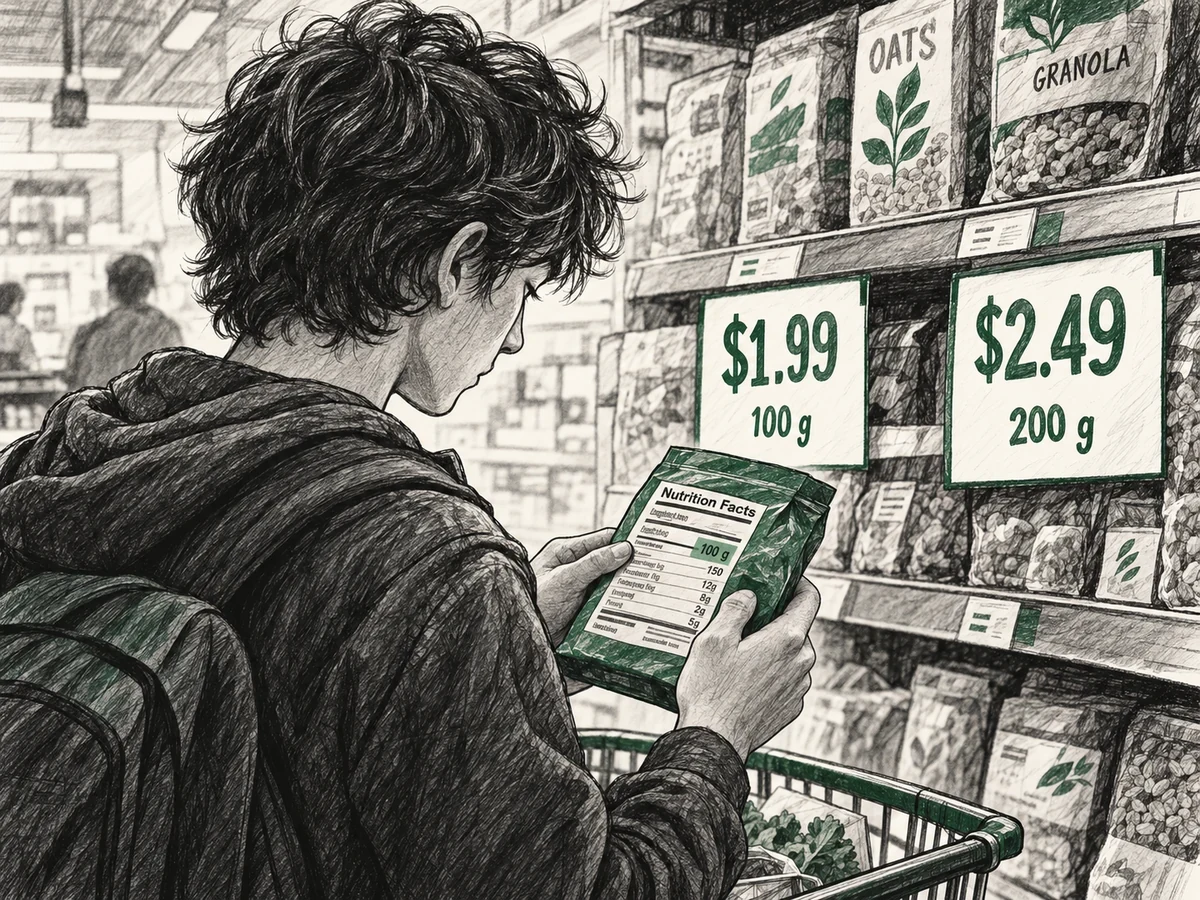
They should be able to read a bill and understand what they're being charged for. They should be able to compare two prices that are packaged differently. They should understand how interest accumulates, compare borrowing costs, and recognize when debt creates serious risk. They should know that gross pay and take-home pay aren't the same thing. They should be able to estimate a total before the app tells them. They should be able to look at a lease, a phone plan, a subscription, a loan offer, or a "free trial" and notice where the hooks are.
They should understand percentages in normal adult situations. They should know that "affordable monthly payment" doesn't mean affordable. They should know that a number can be true and still not tell the truth. They should ask "compared to what?" almost automatically.
That is not genius-level math. That is the minimum.
School problems and real decisions
Most school math problems arrive already cleaned up. Here are the numbers. Here's the question. Here's the method we just practiced. Find the answer.
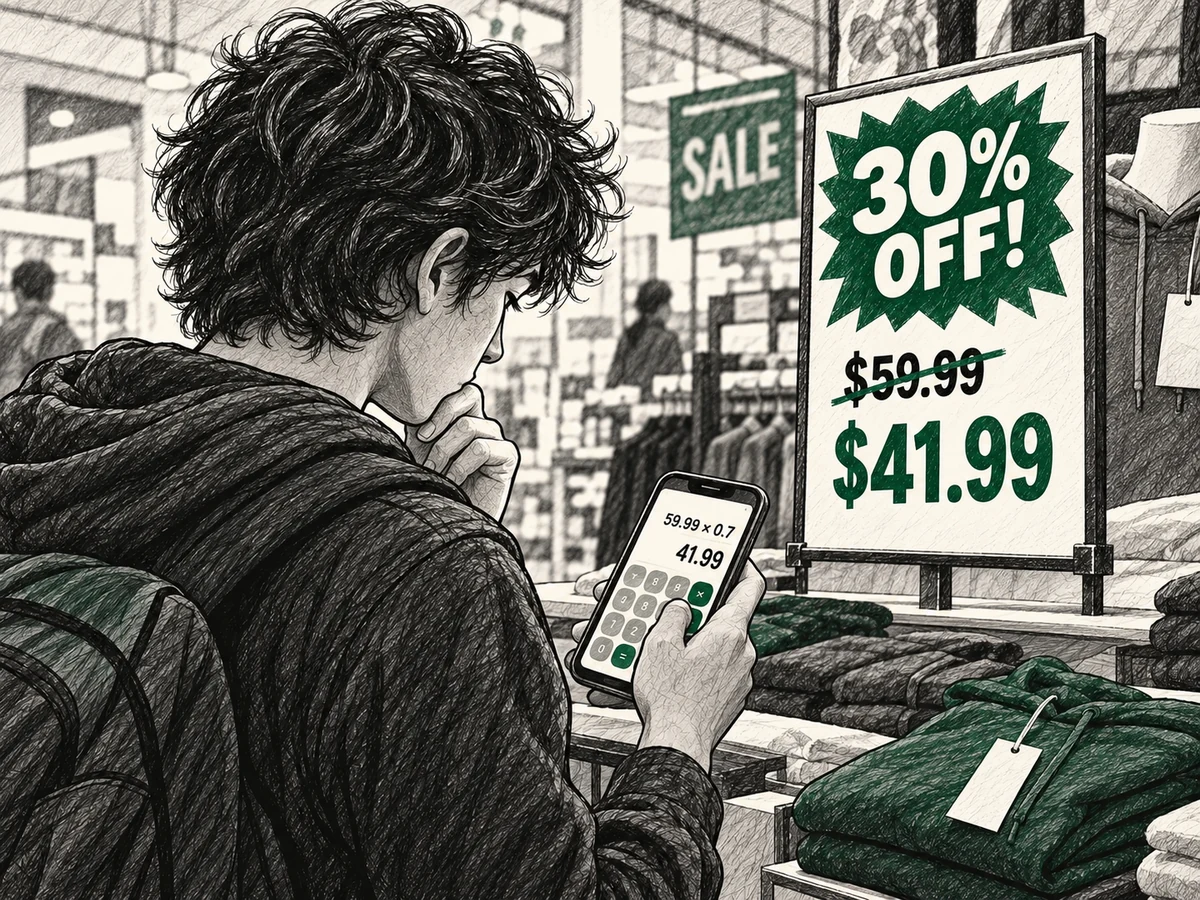
Real life isn't usually that polite. Real life says the phone is free, the plan is only $49 a month, the car payment is affordable, the school is worth the loans, the study proves it, the investment is low risk, the discount saves money, this is what people your age usually pay, and this is normal.
Then it waits to see if you notice what's missing. For how long? At what rate? With what fee? What happens if I'm late? What's the total cost? Who counted this? Who benefits if I believe it?
That's the adult version of math. Not just getting the answer. Knowing what question you're actually answering.
Money is where the lesson starts
Kids should understand money before the world starts lending it to them. That doesn't mean turning every dinner into a lecture about retirement accounts. It means letting them see normal money decisions while they're still young enough to absorb the pattern.
At the store, that might sound like, "That one looks cheaper, but the package is smaller." With subscriptions, it might be, "Five dollars a month doesn't sound like much until it keeps going for years." With shoes, games, snacks, gas, tickets, and repairs, it might be, "We can buy it, but then we're choosing not to buy something else."
With debt, it might be, "The payment is low because they stretched the loan. That doesn't mean it's cheap." With a bill, it might be, "This is what we used. This is what they charged. This is the fee they tucked in."
That's math. It's also judgment. And judgment is the part school often assumes will magically appear later.
It doesn't. Not reliably.
A kid who never sees adults think through money grows into an adult who has to learn it while the penalties are real.
Percentages are everywhere
Percentages are one of those things kids "learn" over and over without necessarily understanding them. Twenty percent off, eight percent sales tax, five percent interest, twenty-four percent APR, three percent inflation, a thirty percent chance of rain, a ten percent raise, and two percent cash back aren't school decorations. They're adult life.
A young adult should know that a raise can disappear if rent climbs faster. They should know that "only 1%" can be enormous when the base number is big. They should know that "the risk doubled" might sound terrifying even when the original risk was tiny. They should know that small percentages repeated over time can become huge.
They should know that a sale isn't savings if they weren't going to buy the thing. They should know that credit card interest isn't a little extra charge. It is a machine.
None of this requires advanced math. It requires familiarity, repetition, and someone stopping long enough to say, "Look at what that number actually means."
Estimation is underrated
One of the best adult skills is being able to smell a bad number. Not prove it yet. Not calculate it perfectly. Just pause and think: that seems too high, that seems too low, that can't be right, that sounds cheap only because they're hiding the total, or that number is precise but I don't trust it.
Estimation gives a person a first defense. Before the calculator, before the spreadsheet, before the app, before the official quote, a kid should have a rough sense of the neighborhood.
How much should groceries cost for this meal? How many hours of work is that purchase? How much gas will this trip take? How long will this project actually take? How much more does this "better deal" cost over a year? How many people are we really talking about?
A calculator gives answers. It doesn't tell you whether the answer is ridiculous.
That has to be built in the person.
Scale changes how you see the world
Kids hear huge numbers all the time: millions, billions, trillions, views, followers, deficits, budgets, salaries, populations, casualties, downloads, and profits. After a while, big numbers all start sounding the same.
That is dangerous.
A million seconds is about eleven and a half days. A billion seconds is over thirty-one years. That difference matters.
A kid should feel the difference between a classroom, a school, a city, a state, a country, and the world. They should know that a viral video isn't the same thing as reality. They should know that a scary story can be true and still rare. They should know that a small percentage can still mean a lot of people when the population is large.
Without scale, people get trapped inside whatever story is loudest.
Charts can lie without technically lying
A number can be accurate and still misleading. That's one of the most important lessons in this domain.
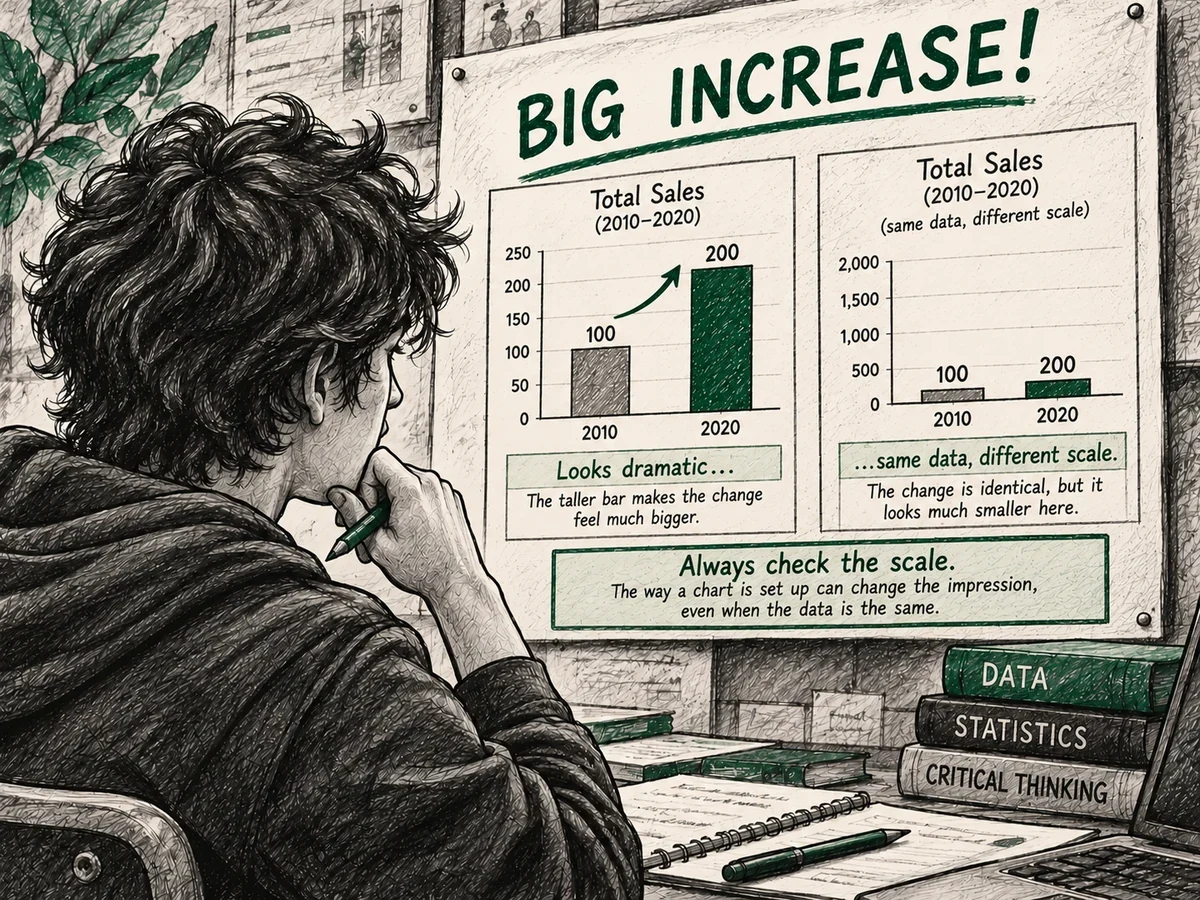
A chart can start its axis in a weird place. An average can hide the split that matters. A percentage can sound dramatic because nobody tells you the base number. A poll can look impressive until you ask who was asked. A ranking can measure something nobody actually cares about.
Kids don't need to become professional statisticians. But by 18, they shouldn't freeze in front of a graph. They should be able to ask who counted this, what they counted, what they left out, whether it is a total or a rate, compared to what, whether this is cause or just two things moving together, and whether it would still sound impressive if they said it plainly.
That is not being cynical. That is being awake.
The world is full of people using numbers to borrow authority. Some of them know what they're doing. Some don't. Either way, a young adult shouldn't be easy prey.
Risk is a number problem too
Most people don't think about risk very well. Kids don't. Adults don't. I don't, half the time.
We fear the vivid thing and ignore the boring thing. We overreact to the story on the news and underreact to the habit that is quietly wrecking us. We treat "possible" and "likely" as if they're the same word.
This matters because risk is everywhere: driving, drinking, borrowing, dating, posting online, traveling, taking medicine, signing contracts, choosing friends, trusting institutions, and ignoring small problems until they become large ones.
A kid should learn to ask how likely this is, how bad it would be, what this choice actually reduces, what new risk it creates, and whether they're reacting to the probability or just the fear.
That last question is a life skill. A person who can't think about risk will borrow someone else's fear, usually from someone selling something.
Beyond the floor
Beyond the floor, numbers become tools. A young person can plan a trip, price a project, track a goal, compare jobs, understand opportunity cost, think about debt before signing, use a spreadsheet without worshiping it, notice when a habit is costing more than they want to admit, and decide whether something is worth the hours of life it takes to pay for it.
That's when math stops being a class and becomes agency.
Some kids should absolutely go deep into higher math. Calculus, statistics, computer science, engineering, economics, physics, finance, design, trades, medicine — all of that can matter.
This domain isn't an argument for less math. It's an argument for math that survives contact with life.
What knowing math looks like
This is not an argument against math class, algebra, geometry, statistics, or kids who want to go deep. It is not permission to stop at calculator dependence, vibes, or "I'm just not a math person."
It is also not an argument for turning every child into a tiny accountant. Numeracy is not finance. Finance gets its own domain. This one is about number sense: the ability to read quantity, scale, probability, and comparison well enough not to be fooled by the adult world's math.
Everyday opportunities to use numbers
Families don't need a formal program for this. They need to stop hiding all the numbers.
Let kids compare prices. Let them calculate the tip. Let them estimate the grocery total. Let them help plan food for a trip. Let them see what gas costs. Let them hear why one choice is worth it and another is not. Let them watch you reject a bad deal.
Let them see you check. That may be the biggest thing.
"I don't know if that number is right. Let's look."
That sentence teaches more than a worksheet sometimes. It teaches that numbers aren't magic. They're not gods. They're not automatically true because someone said them with confidence.
They're tools. And tools can be used well or badly.
Pause before you believe the number
The real test of Domain 2 isn't whether a young adult remembers every formula. The real test is whether they can stand in front of a number and stay awake.
A price. A rate. A chart. A loan. A risk. A salary. A discount. A payment plan. A statistic. A promise.
Can they slow down? Can they estimate? Can they compare? Can they ask what is missing? Can they tell the difference between useful precision and fake certainty? Can they avoid being rushed by numbers designed to rush them?
That's practical numeracy. It's not just passing math class. It's part of not getting played.
Which everyday number do you wish you had learned to question sooner? Send your experience or objection. The examples that challenge this argument are often the most useful.