What Would Change Your Mind?
Scientific thinking in everyday life means separating observation from assumption, checking evidence, testing explanations, and being willing to revise a belief.
A plant is dying. Someone says it needs more water. Someone else says it's getting too much. Both explanations sound reasonable, and neither becomes true because the person saying it sounds confident.
That small problem captures something I want from scientific thinking: observe first, separate the evidence from the explanation, try something that could distinguish between competing accounts, and change your mind when the results point elsewhere.
Science education matters because young people need to know how the physical world works. Scientific thinking matters because they will face claims about health, products, weather, technology, and public decisions long after their last school lab. They need the habit of asking how we know.
Where observation matters
Real life will not hand them a clean experiment with labeled materials and an answer the adult already knows. It will hand them a symptom, a headline, a broken appliance, a dying plant, a product claim, a weird smell, a weather pattern, or a confident stranger with a theory.
It will ask whether they can slow down, observe carefully, separate what happened from what they think it means, and keep checking until reality has had a chance to answer.
Real life does not hand you a lab sheet
A lot of school science arrives already solved. The question is chosen, the materials are listed, the procedure is written, the expected result is known, and the student mostly follows directions and writes the correct conclusion.
Real life is messier. It gives you a sick plant, a weird smell in the basement, a dog that keeps scratching, a headline that sounds terrifying, a medicine that helped one person and not another, a product with fake science on the label, and a weather pattern that doesn't match what people are saying online.
Then it asks whether you can think.
The adult version of science isn't just knowing facts. It's knowing how to approach uncertainty without panicking, guessing, or handing your brain to the loudest person in the room.
What the evidence should show
The floor is not "complete a biology course." It is not "memorize the periodic table." It is not "win a science fair."
By 18, they should be able to think their way through a real question. They should be able to ask "How do we know that?" and mean it. They should be able to design a simple test, run it, and interpret what happened honestly — including "I don't know" or "my guess was wrong."
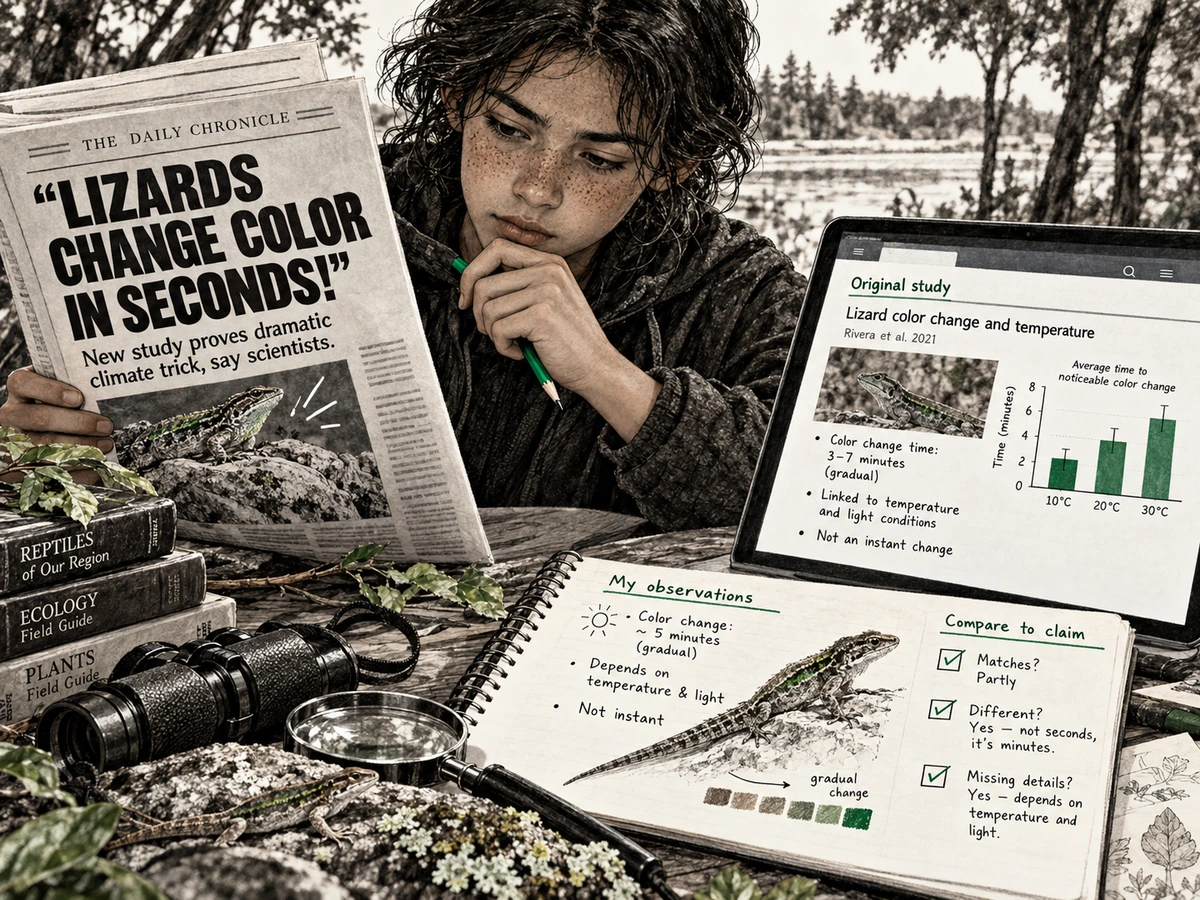
They should be able to observe carefully and document what they see without immediately jumping to conclusions. They should be able to tell the difference between correlation and causation, anecdote and data, one study and scientific consensus. They should be able to read a science news article and often spot when the headline overstates what the research actually found.
They should understand that their body is a biological system — sleep, digestion, movement, hormones, immune response — not a black box. They should grasp enough of the physical world to not be mystified by weather, electricity, combustion, infection, ecosystems, or why the sky is blue. They should recognize that scientific knowledge updates and still be able to act on the best current understanding.
That's the floor: not deep content mastery, but functional contact with reality.
Observation before explanation
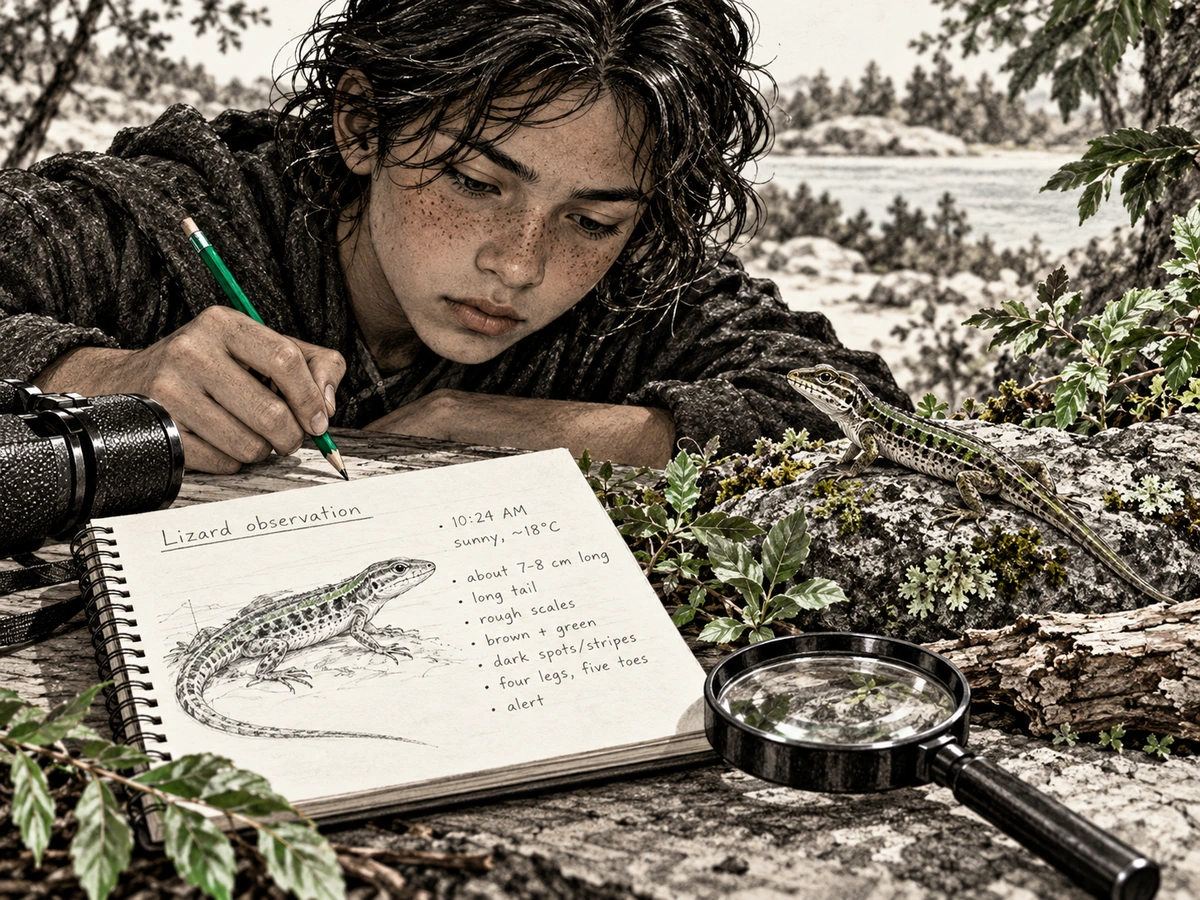
One of the biggest skills in this domain is learning to separate what happened from what you think it means.
Kids jump fast. Adults do too. The plant died, so I'm bad at plants. The teacher hates me. That food made me sick. This supplement works because the video said so. Everyone is getting sick because of that one thing I heard about.
Maybe. Maybe not.
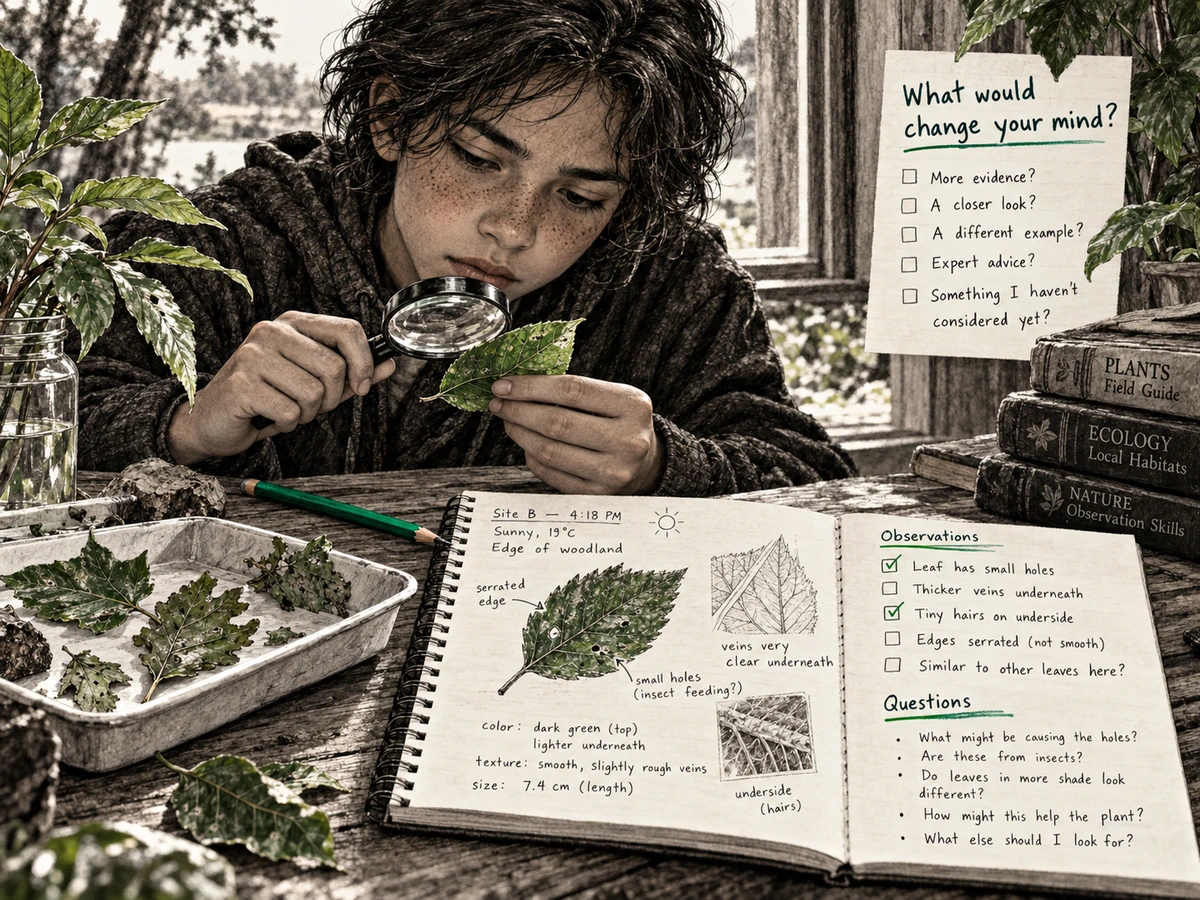
Scientific thinking teaches the pause. What did we actually observe? What else could explain it? What information are we missing? What would we expect to see if our explanation were true? How could we check?
A person who can't separate observation from interpretation is easy to fool. They can be moved around by anecdotes, headlines, fear, confidence, and their own first reaction.
By 18, they should be able to slow down and say, "Here's what I saw. Here's what I think it might mean. Here's what I still don't know."
That's a serious adult skill.
Cynicism is not the goal
Modern life is packed with science-flavored claims: health claims, food claims, climate claims, fitness claims, medical claims, technology claims, "studies show" claims, "experts say" claims, and "they don't want you to know" claims.
Some are true. Some are garbage with a chart attached. Most are somewhere in between.
A young adult doesn't need to become cynical. Cynicism is cheap. It's just gullibility with a meaner face.
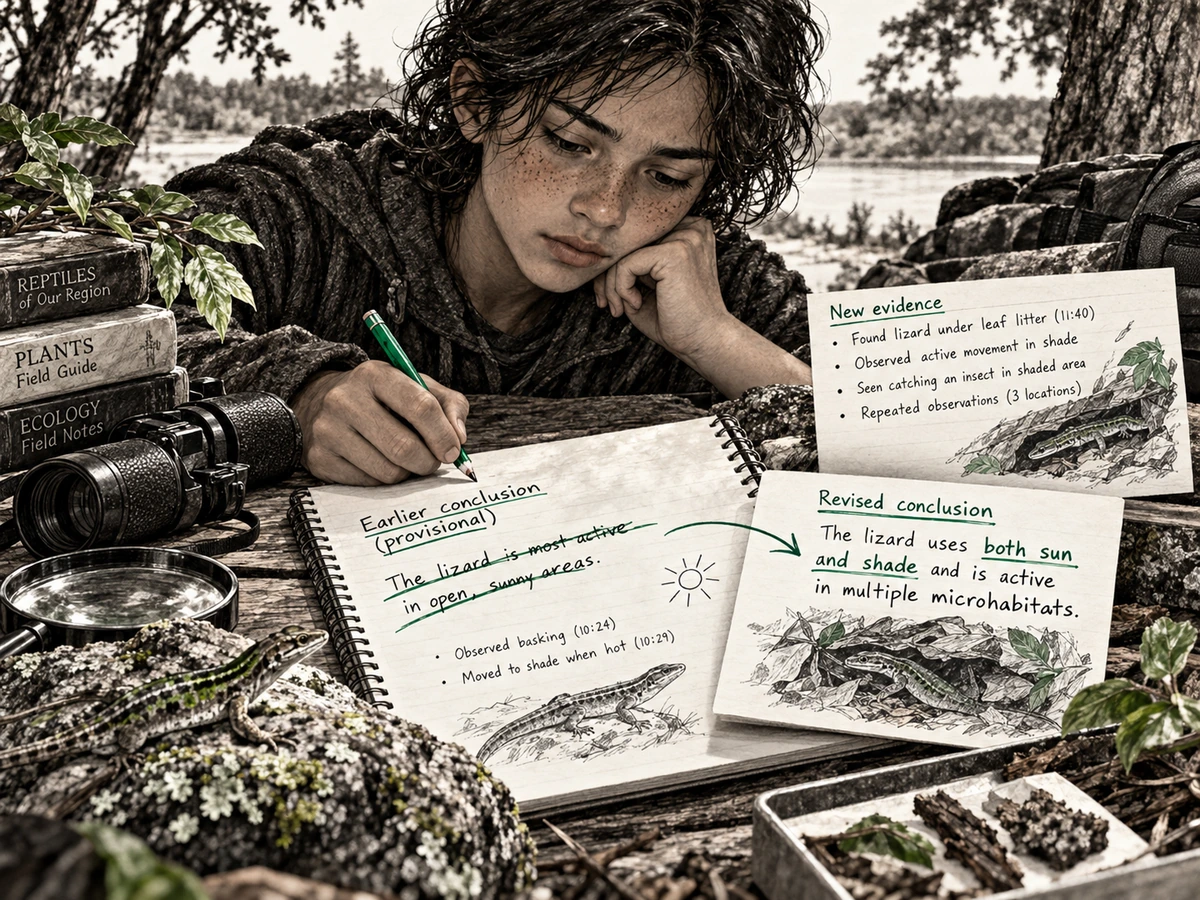
The better target is disciplined skepticism: show me how you know. What kind of evidence is that? Who benefits if I believe this? What would change my mind?
That last question matters most.
A person who has no answer to "What would change my mind?" isn't thinking scientifically anymore. They're defending a position.
We all do that sometimes. The goal is to notice when it's happening.
Science changes because science works
Kids also need to understand that scientific knowledge updates. That doesn't mean science is fake. It means science is alive.
Better tools create better measurements. Better studies correct weaker studies. New evidence replaces old confidence. A strong conclusion becomes more precise. A weak conclusion collapses.
Without that understanding, people fall into two childish patterns. One says, "Science changed its mind, so you can't trust science." The other says, "Science said it, so no one is allowed to question it."
Both are bad.
A better version is: "This is the best current explanation based on the evidence we have. We should take good evidence seriously, and we should stay honest when better evidence arrives."
That's hard for adults, which is why kids need practice before the stakes are high.
Evidence should prove capability
This domain should produce evidence, but not paperwork for its own sake. A garden log can count. A comparison of three sources making the same science claim can count. A short explanation of why correlation is not causation can count. A kid explaining why a plant failed and what they would change next time can count.
The question isn't whether the work looks school-ish. The question is whether the capability is real.
Can they observe? Can they document? Can they test? Can they explain what changed? Can someone else look at the evidence and see the thinking?
That's the point.
Skepticism without cynicism
This is not about turning every kid into a scientist, a lab-report machine, or someone who refuses to act until the evidence is perfect. Real life still requires decisions with incomplete information.
It is also not about sneering at everything as fake. The target is not cynicism. The target is honest contact with evidence: enough skepticism to avoid being fooled, and enough humility to update when reality pushes back.
Make curiosity a habit
Families don't need to turn the house into a lab. They need to treat ordinary observation as real learning.
Grow something. Track the weather. Compare two recipes. Figure out why the bike tire keeps going flat. Test whether a bedtime change actually improves the morning. Read a scary headline and trace the claim back to the source.
Ask what evidence would count. Ask what else could explain it. Let the kid be wrong without making wrongness feel fatal.
If being wrong is humiliating, kids learn to defend their first answer. If being wrong is part of the process, they learn to revise.
That difference matters more than the lab report.
The question is what would change your mind
The real test of Domain 3 isn't whether a young adult remembers every science fact they were taught. The real test is whether they can meet reality without making things up.
Can they ask, "How do we know?" Can they tell the difference between a story, a claim, and evidence? Can they update their thinking without treating it like humiliation? Can they say "I don't know yet" and then do the next useful thing?
That is Scientific Thinking & Observation. Not just science class. Part of not getting fooled. Part of not fooling yourself.
What helped you or your child learn to test an explanation rather than simply believe it? Send your experience or objection. The examples that challenge this argument are often the most useful.