Who Makes the Rules?
Civic literacy for young adults means understanding power, history, government, institutions, and how to navigate rules when the system is unfamiliar.
Knowing the three branches of government is useful. Knowing which office can actually solve your problem may be more urgent. If a rule is enforced against you, where did it come from? Who can interpret it? Who can change it? What can you do if an institution gets something wrong?
That's civics as a life skill. History helps explain how those institutions and power relationships developed. Geography and cultural knowledge help us understand that the system we grew up with isn't the only one. News literacy helps us judge competing accounts of what institutions are doing now.
I want a young adult who can enter an unfamiliar city or country, learn how its institutions work, and ask informed questions rather than simply accepting whatever the first official-looking person says.
The systems you actually encounter
Real life will ask whether they can figure out which office has power, which rule applies, which right or procedure matters in that place, and where to get help when they are past their depth.
It will ask whether they can read a news story without being recruited by it, walk into a new city without becoming helpless, notice when authority is being used on them, and remember that rights, rules, customs, and procedures change across states, countries, institutions, and borders.
School civics gives you a clean diagram
A lot of school civics arrives already simplified. Three branches. Checks and balances. Bill of Rights. Vote. Pay taxes. Obey laws.
The diagram isn't wrong. It's just polite.
Real life is messier. Real life gives you a cop at the window asking questions you don't know how to answer, a landlord changing the rules halfway through, a border agent deciding whether your paperwork is good enough, an employer firing you when you don't know what you're owed, a platform deleting your account with no obvious appeal, a government letter that looks half-real, and a headline that makes you feel sick before you decide whether it should.
Then it asks whether you can stay oriented.
The adult version of civics isn't just knowing the diagram. It's knowing how to act when the diagram doesn't match the room you're standing in.
What a young adult needs to navigate
The floor is not "memorize the presidents." It is not "name every battle." It is not "believe the official patriotic story." It is not "believe the cynical anti-patriotic story either."
By 18, they should be able to live inside a system without being run over by it.
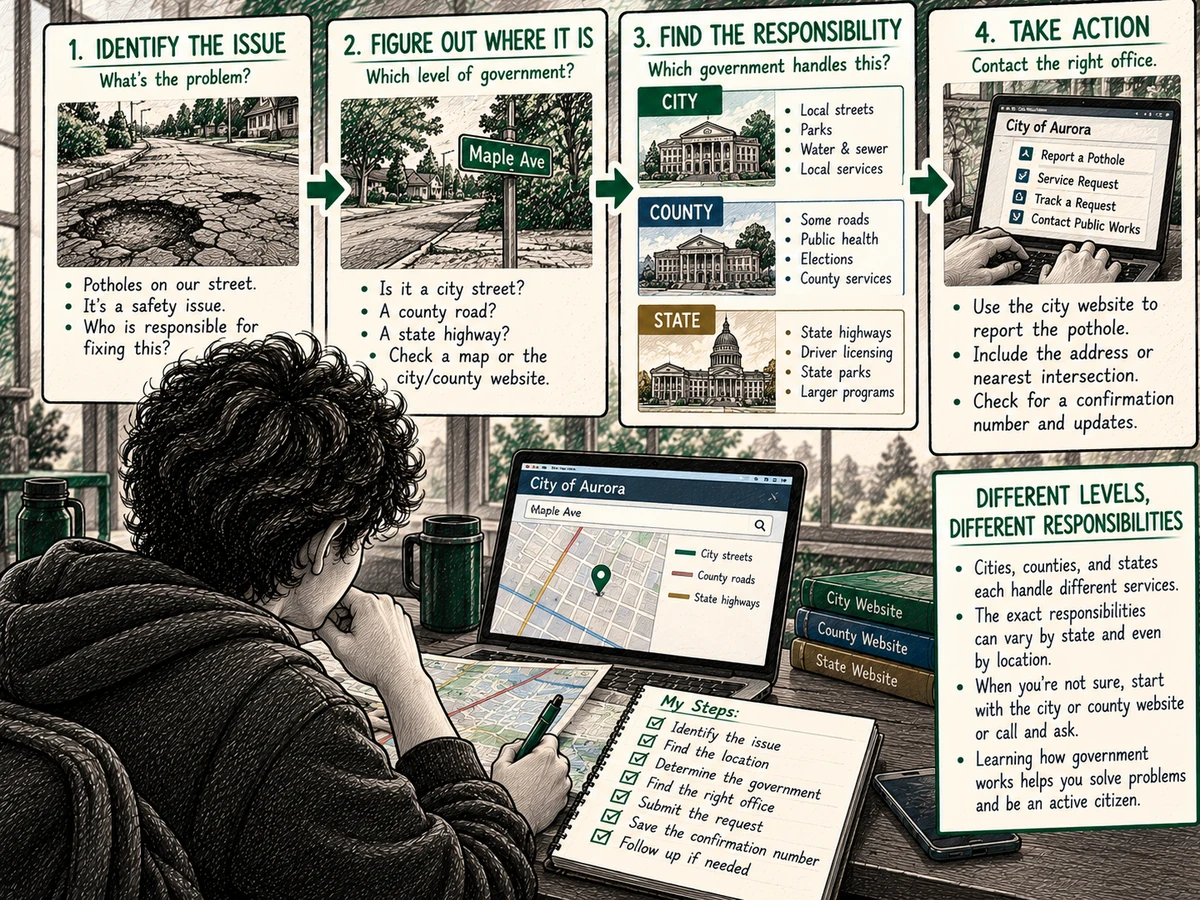
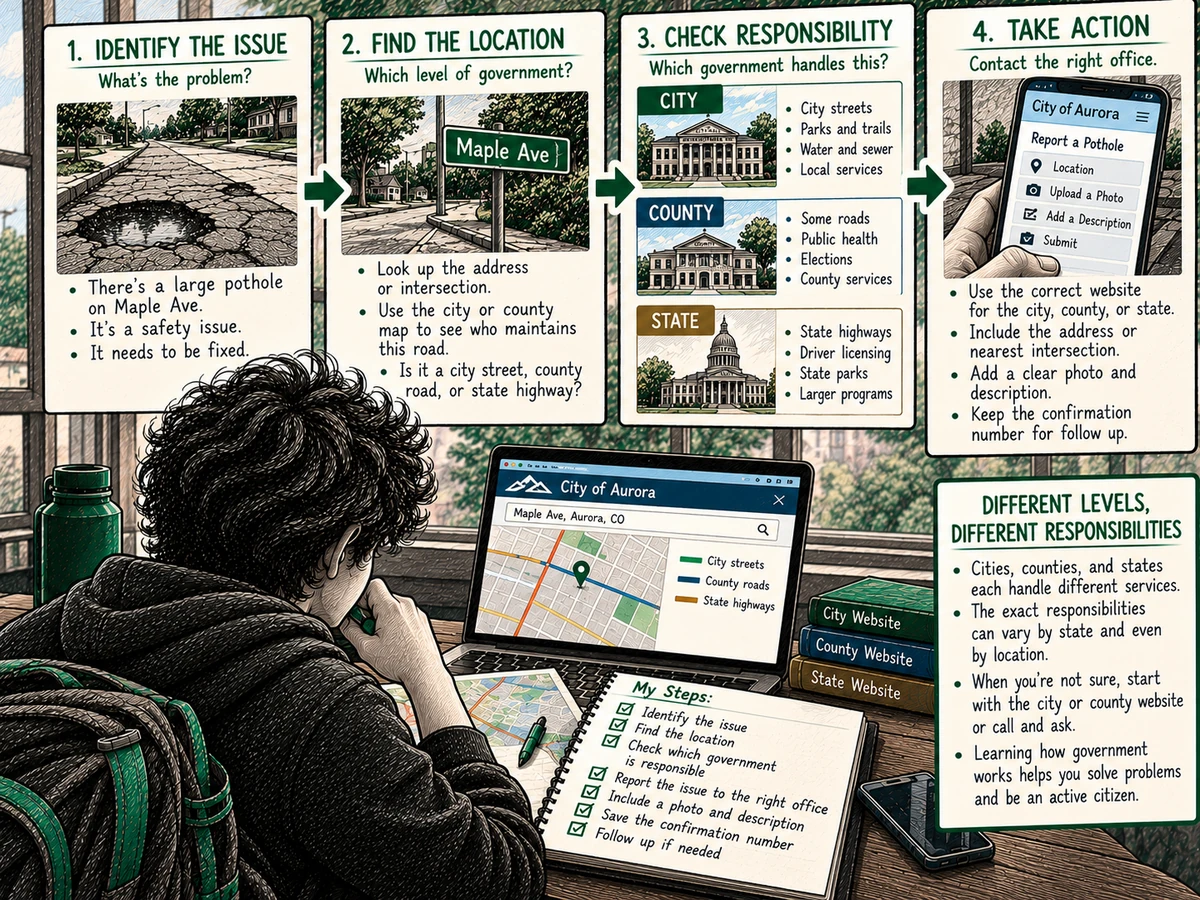
They should know how to start figuring out who is responsible for what when something goes wrong — landlord or city, employer or court, local police or federal agency, the platform or no one obvious. They should understand the civic structures that affect them: how laws get made, how courts work, what rights and procedures may apply, where those rights differ by country or jurisdiction, and how to find qualified help when they're out of their depth.
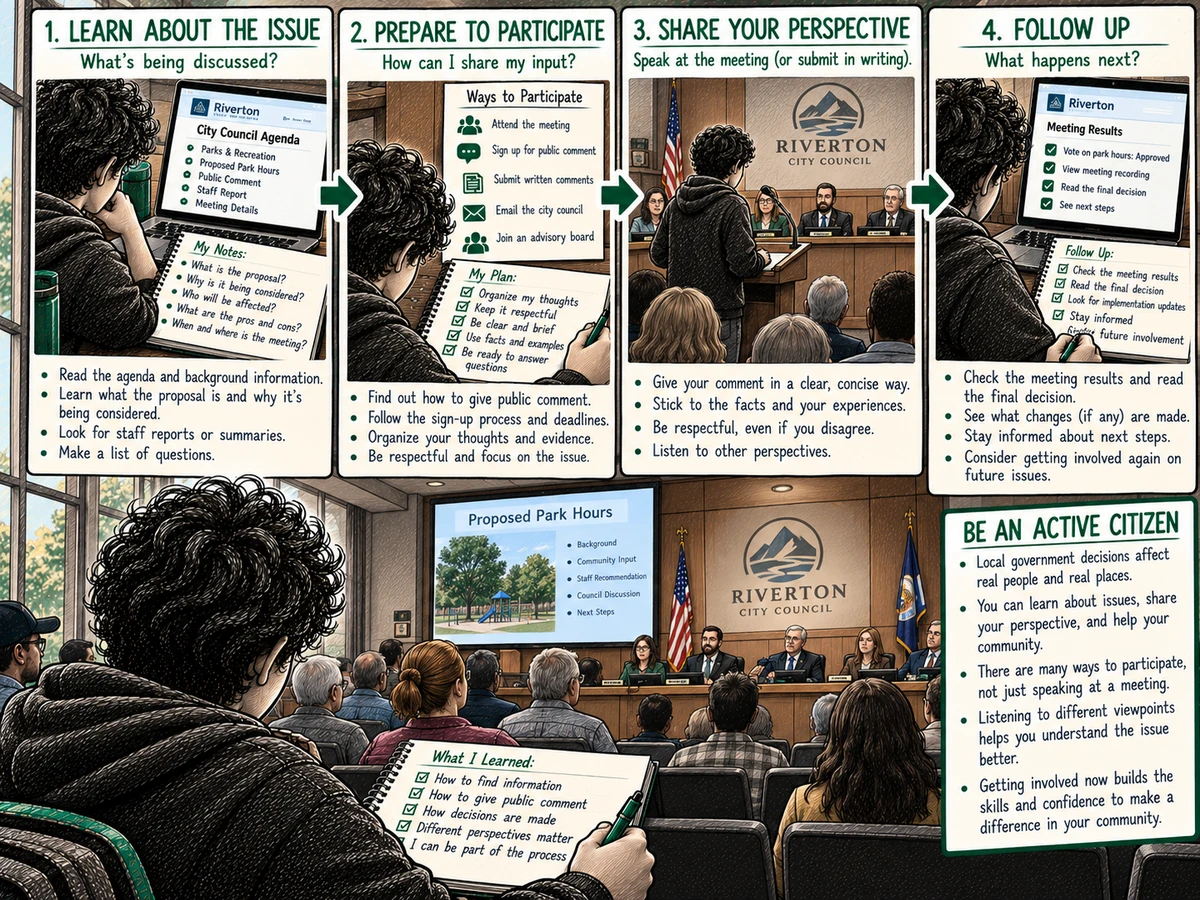
They should know enough about rights, procedures, and help-seeking not to freeze when stopped, questioned, or out of their element. They should be able to vote if they want to. They should know how to register, where to go, what office they're actually voting for, and what that office actually does.
They should be able to read a news story without getting played — checking the source, noticing what is missing, and holding more than one version of the event at once. They should recognize that systems were built by people, are maintained by people, and can be changed by people.
They should recognize when "that's just how things work" is true, and when it's cover for someone who benefits from things working that way.
That's the floor: not full mastery, not legal expertise, but not standing helpless in front of the institutions that shape their life.
Power has structure
Kids meet power before they have words for it. A parent says no. A teacher controls the room. A coach decides who plays. A boss decides what gets done. A landlord writes the lease. A court makes a ruling. A border agent stamps the passport. A platform decides what gets seen. A government decides what is legal.
That's power. Some of it is fair. Some of it isn't. Some of it is invisible until it lands on you.
A capable young adult needs to understand that power has structure. In a democracy, power is supposed to move through elections, laws, courts, rights, and public accountability. In an authoritarian state, it moves differently. In a corporation, it moves differently again. In a family, a church, a school, or a border crossing, every system has its own incentives, gatekeepers, rules, and loopholes.
The point isn't to make kids paranoid. The point is to make them harder to surprise.
A young adult who understands that power has shape can ask the right questions fast. Who is actually deciding this? What rule am I dealing with? What are my options? Who can help?
Without that, they freeze. Or they pick a side based on whoever sounded most sure.
The system was built
This might be the most important idea in this domain. The systems you live inside were built by somebody.
Schools. Borders. Laws. Courts. Currencies. Markets. Police. Welfare. Taxes. Voting districts. Passports. Insurance. Zoning. Permits.
All of it was designed. That doesn't make it fake. It means it was made.
And because it was made, it has design choices inside it. Some choices were good. Some were bad. Some made sense once and no longer do. Some help one group and hurt another.
If a kid doesn't see that, they grow up confusing familiar with natural. They think the system they were raised inside is reality itself.
It's not. It's one arrangement among many.
A young adult should be able to look at a system and ask: What problem was this trying to solve? Who designed it? Who does it help? Who does it hurt? What would happen if it changed?
That's not cynicism. That's adulthood.
Knowing the system is freedom
Here's the part that gets undersold. A young adult who can read systems is free in a way most people aren't.
They can move.
They can drive across the country and understand that the rules change when the state changes — traffic laws, park rules, tenant rules, permits, voting rules, public-space rules, and the quiet local customs nobody puts on the sign.
They can move to a new city and figure out the bus system, the lease, the utility setup, the library card, the recycling rules, and the right office for the right problem without panicking on day three.
They can go camping in a national forest and know that different kinds of land can have different rules and authorities — federal, state, local, private, tribal, or something else entirely — which matters when somebody pulls up and asks what you're doing there.
They can travel and not be the easy mark. They know the embassy exists and what it can and cannot do. They know that informal fixers sometimes appear around confusing systems. They know that "the police" means different things in different places, and that the rules they grew up with don't follow them across a border.
They can live abroad. Get a visa. Open a bank account. Sign a lease in a language they're still learning. Figure out the healthcare system. Learn which forms matter and which ones are theater.
Here's the thing the worksheet version of civics never tells you. Knowing how systems work isn't a chore. It's a key. The kid who can read systems can go places. The kid who can't stays close to whoever does the paperwork for them.
For our kids — with roots in the United States, the Philippines, and Ireland, and a real chance of moving through more than one of those in their lives — this isn't abstract. Three countries. Three civic systems. Three different sets of assumptions about authority, community, and what the government is for.
A kid who understands that systems are readable can walk into any of them and start figuring it out. A kid who doesn't stays a tourist in their own life.
The news looks professional. So does the fake stuff.
Modern life is packed with people trying to tell you what to think. The news. Politicians. Pundits. Influencers. Algorithms. Friends. Family. Companies. Countries.
A young adult who can't read those signals is going to be moved around like cargo.
Reading the news well isn't a stance. It's a habit.
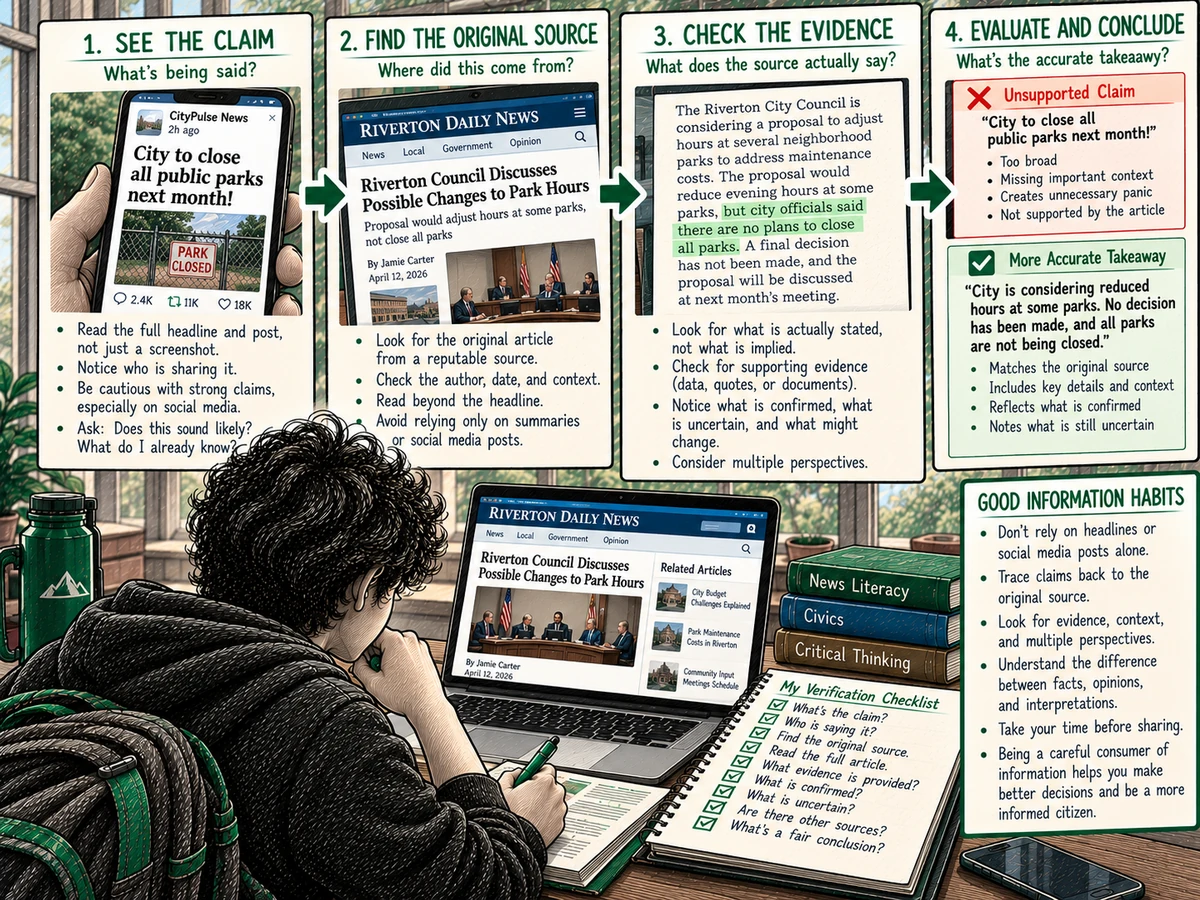
What's the source? What's the evidence? What's the headline trying to make me feel? What facts are confirmed? What's missing? What would I believe if the sides were reversed?
That last one matters.
A person who has different standards for evidence depending on whether they like the conclusion isn't thinking critically anymore. They're wearing a uniform.
We all do this sometimes. The goal is to catch yourself.
Cynicism isn't the answer either. "I don't believe anything" is just a different way of letting somebody else handle your thinking. Eventually, a confident enough voice fills the gap.
The better target is disciplined skepticism with a working memory of history.
History is pattern recognition
History class can become a storage unit for names and dates. The stronger version asks: what keeps happening?
How do movements start small and become powerful? How do ordinary people get pulled into terrible things and feel righteous about it? How do institutions lose trust? How do countries tell themselves stories that make them look better than they were?
A young adult who understands history as pattern recognition is harder to recruit.
They can ask: What happened before this? Who benefits from this version of the story? What is being left out? What conditions made this possible?
History doesn't repeat in cute quotable ways. But humans keep being human. They want safety, status, belonging, someone to blame, someone to follow, and a story that explains why their side is right.
A kid who knows that is harder to use.
What civics is not
This is not legal advice, political training, patriotic programming, or anti-patriotic programming. It is not about telling kids which side to join or making them suspicious of every institution they meet.
It is about orientation. A young adult should know enough about power, law, place, history, and civic systems to ask better questions, seek qualified help when needed, and avoid mistaking one familiar system for the whole world.
Learn to navigate actual institutions
Families don't need to recreate a school civics curriculum at home. They need to treat the world as readable.
When a rule shows up, ask where it came from. When a bill arrives, ask which institution is behind it. When an election happens, look at what the office actually does. When a news story breaks, compare sources before reacting. When traveling — across the state, across the country, across the world — notice how different places handle police, money, transportation, religion, language, and authority. When a family story comes up, place it in history.
When a kid says, "That's not fair," don't rush past it. Ask the next question.
Fair according to what rule? Who made the rule? What is it trying to protect? Who does it burden? What would a better one look like?
That's Social Studies & Civics. Not the worksheet. The real thing.
Can you find who has the authority?
The real test of Domain 4 isn't whether a young adult remembers enough dates. The real test is whether they can stand in front of a system, a story, or a person trying to move them, and keep their balance.
Can they recognize power when it's acting on them? Can they navigate an institution without freezing? Can they read the news without becoming a puppet? Can they belong somewhere without going blind to it? Can they criticize something without going smug and useless?
Can they walk into a new city, a new state, or a new country and start reading the system instead of waiting for someone to translate it for them?
That's the point of Domain 4. Not social studies as school subject. Social studies as civic adulthood.
Which institution was hardest for you to figure out the first time? Send your experience or objection. The examples that challenge this argument are often the most useful.